

Many companies treat their website like a printed brochure. They pay for it once, launch it, and then leave it alone for three or four years until it looks so dated they have to start again.
That approach wastes money. A website can be one of the few business assets that becomes more valuable over time, but only if you treat it like one. Here is how.
Start with a clear job for the website
A growth asset needs a purpose you can measure. "Look professional" is a start, but it is not a goal. Ask what you want visitors to do:
- Call or WhatsApp you
- Fill in a quote or consultation form
- Book an appointment
- Buy a product
- Apply for admission or a job
Pick one main action and make it obvious on every page. Every design decision after that should make the action easier.
If your website does not have a job, it cannot do it well.
Measure what matters, not everything
You cannot grow what you do not measure. At minimum, set up Google Analytics and Google Search Console when your site launches. They are free, and together they tell you who visits, where they come from, what they search for and which pages they read.
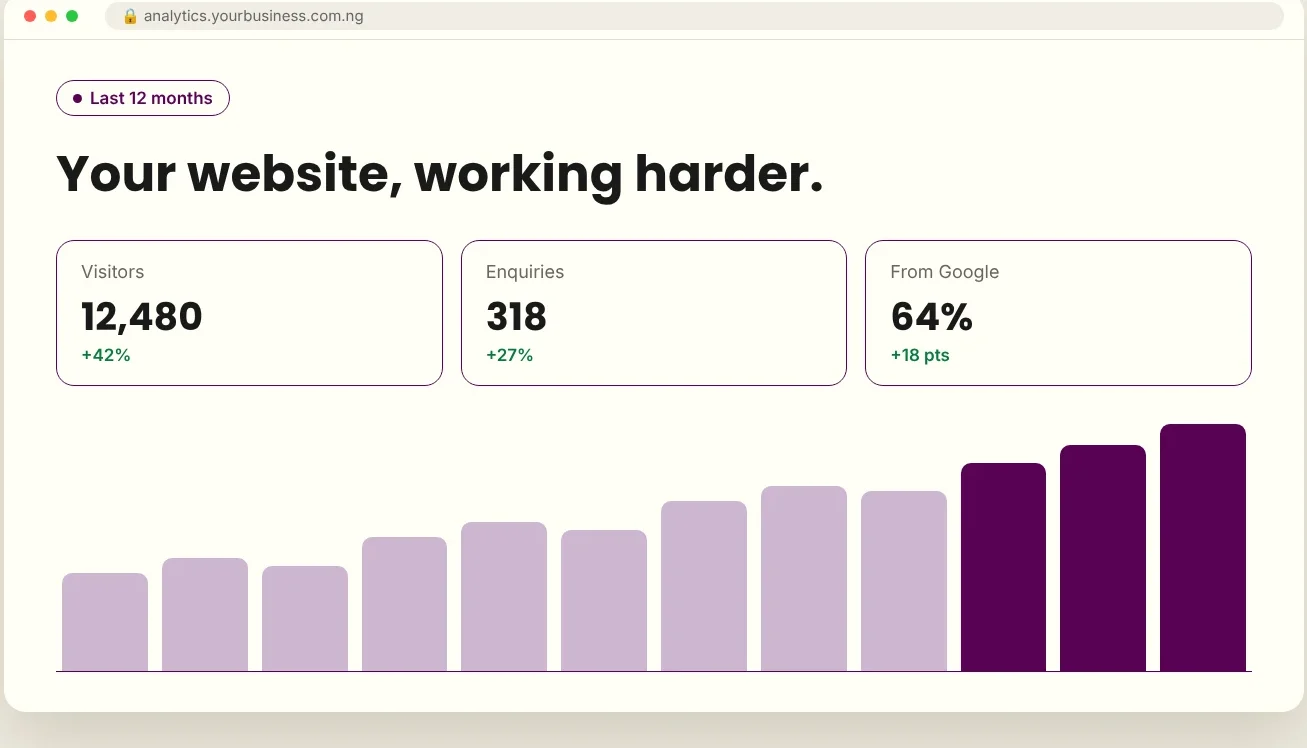
You do not need a complicated dashboard. Track a handful of numbers every month:
- Visitors, and where they came from
- Enquiries, calls or bookings from the website
- Your top five pages
- The searches people use to find you
Watch the trend over time. If enquiries rise when you publish a new service page, publish more like it. If visitors leave a page quickly, fix that page.
Keep the content alive
Search engines and visitors both reward websites that stay current. That does not mean posting every day. It means:
- Updating service pages when your offer changes
- Adding new projects, case studies and client results
- Publishing helpful articles that answer real customer questions
- Removing outdated staff, prices and promotions
A practical rhythm for a small team is one useful article a month and a quick review of key pages every quarter. Over a year, that adds up to a library of content that brings in visitors while you sleep.
Show up where local customers search
For many Nigerian businesses, the first impression is not the website. It is the Google search result or the map listing. A verified Google Business Profile, with correct hours, photos and reviews, sends people straight to your website and your phone.
Make sure your business name, address and phone number match exactly across your website, Google profile and social pages. Inconsistent details confuse both customers and search engines.
Look after the technical side
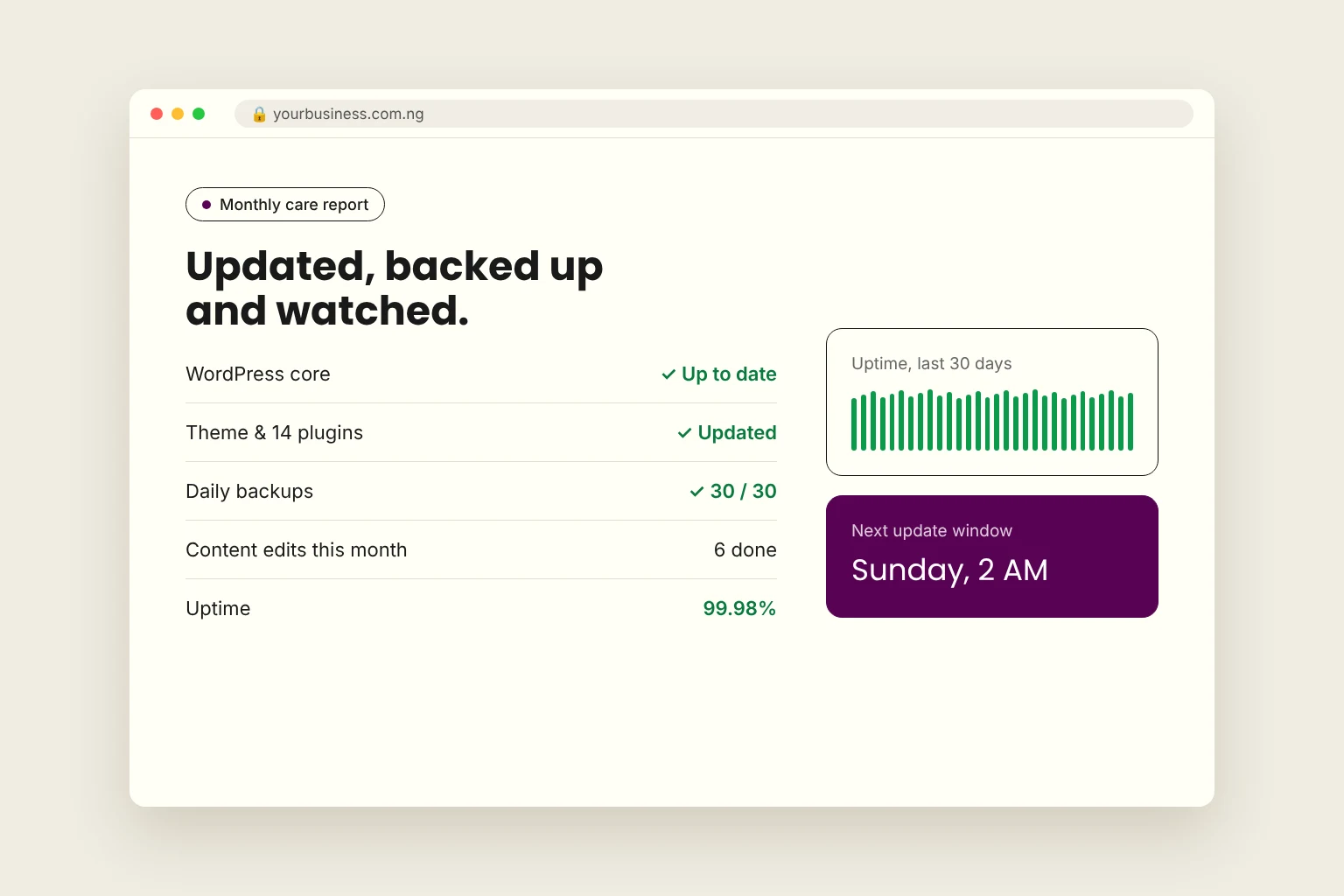
A website that is slow, broken or hacked loses visitors and trust quickly. Monthly care keeps your asset in good condition:
- Software and plugin updates
- Daily or weekly backups stored off the server
- Security scans and uptime monitoring
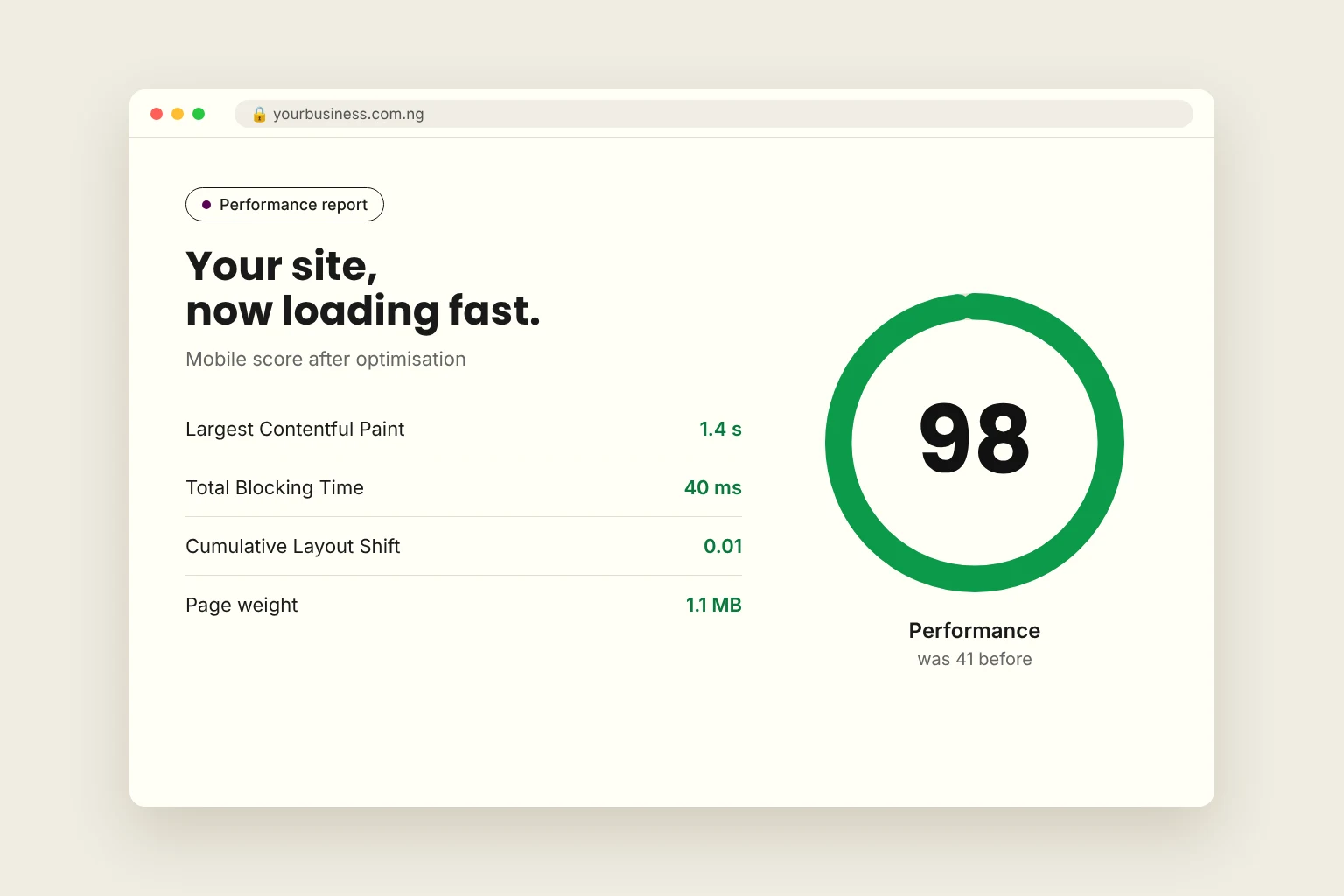
- Speed checks, especially on mobile
Improve in small steps
You do not need a full redesign every few years if you improve as you go. Small, regular changes add up:
- A clearer headline on the home page
- A shorter contact form
- Better photos of your team or work
- A new testimonial on your busiest service page
Test one change at a time and watch your numbers. This steady approach is cheaper than rebuilding, and it keeps your website aligned with how your business actually works today.
- Give your website one clear job and make it easy on every page.
- Track a few numbers monthly: visitors, enquiries, top pages and searches.
- Add useful content regularly and keep key pages current.
- Monthly care protects the asset; small improvements grow it.
The bottom line
A website becomes a growth asset when it has a clear purpose, current content, honest measurement and regular care. Treat it like part of your team, not a one-off purchase, and it will keep paying you back.
Tell us about your business and we will recommend the right next step. The first consultation is free.