
"How much does a website cost?" is the first question most people ask, and the honest answer is always "it depends". That is frustrating to hear, so in this article we explain exactly what it depends on.
Once you understand what goes into a website, you can compare quotes properly, avoid paying for things you do not need, and spot the quotes that look cheap because something important is missing.
The number of pages and how different they are
A five-page website with a home page, about page, services page, contact page and a simple blog is a very different job from a forty-page site with separate pages for every service, location and team member.
It is not only about the count. Pages that share a layout, such as individual blog posts or team profiles, are quicker to build than pages that each need their own design.
The question is not just how many pages you need, but how many different kinds of page.
Custom design or a ready-made template
A template gives you a fast, affordable start, but your website may look similar to many others. A custom design is planned around your brand, your audience and your goals, which takes more time.
Many projects sit in the middle: a solid, well-built foundation with a design tailored to your brand. Ask your designer which approach they are using, so you know what you are comparing.
Features and functionality
Features are where costs grow fastest. Each of these adds work:
- Online booking or appointment scheduling
- An online shop with payments and delivery options
- Member areas, client portals or logins
- Multiple languages
- Integrations with CRMs, payment gateways or other systems

List the features you need at launch and the ones that can wait. Building in phases keeps your first investment focused.
Content: who writes it and who provides photos
Content takes more time than most people expect. If you provide finished text and good photos, the project moves faster. If you need help writing pages, rephrasing technical content or sourcing images, that is additional work, and it is worth paying for when done well.
Professional photos of your team and premises often do more for trust than any design choice.
Branding
If you already have a logo, brand colours and fonts, your designer can build on them. If you do not, the brand needs to be created first. Some businesses add logo design and brand assets to the same project so everything matches from the start.
Hosting, domain and email
These are running costs rather than one-off costs. You will usually pay yearly for:
- Your domain name
- Hosting for the website
- Business email licences, if you use them
- Premium plugins or tools, if your site needs them
Check whether these are included in a quote or billed separately, and who owns each account. They should always be in your business's name.
Care after launch
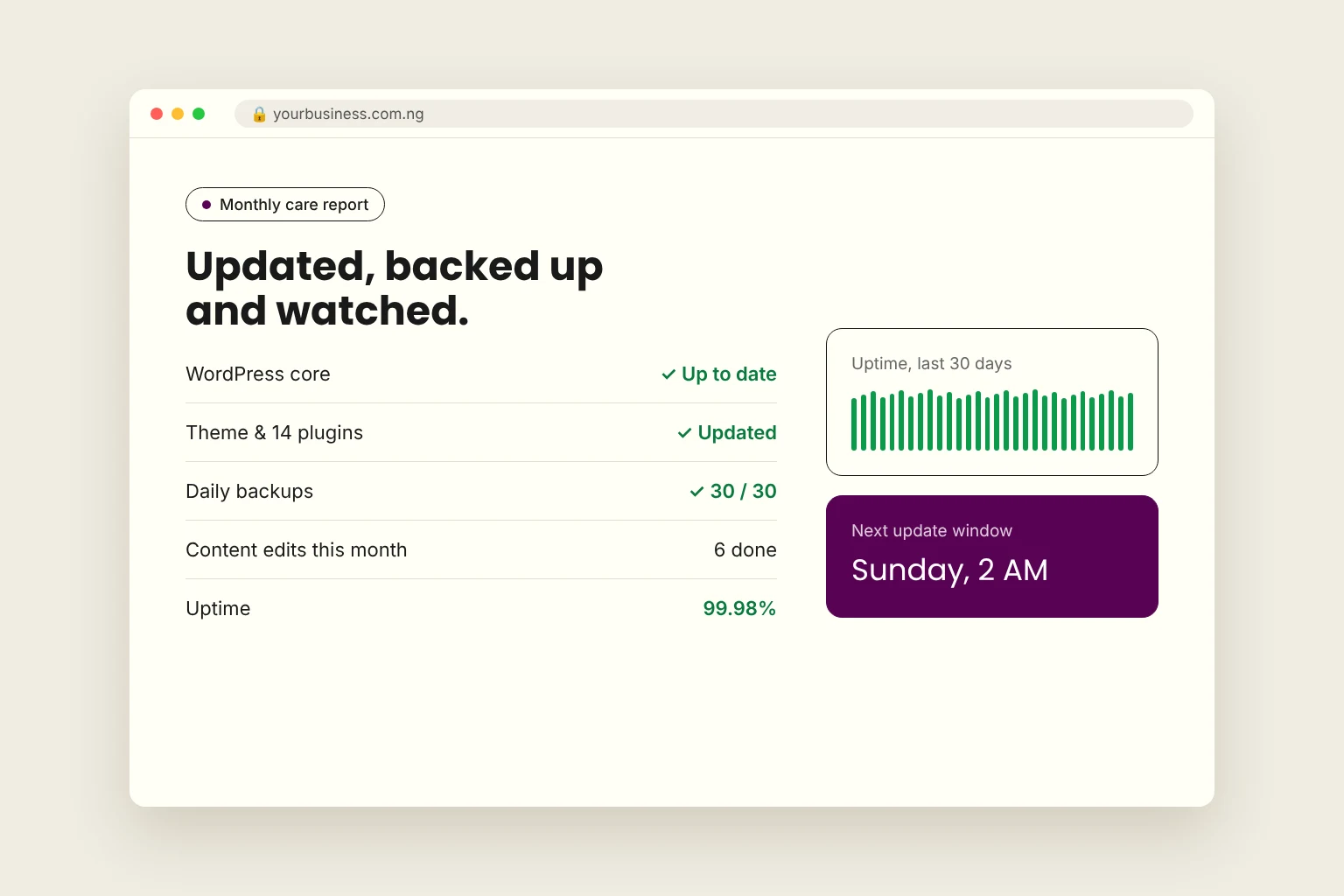
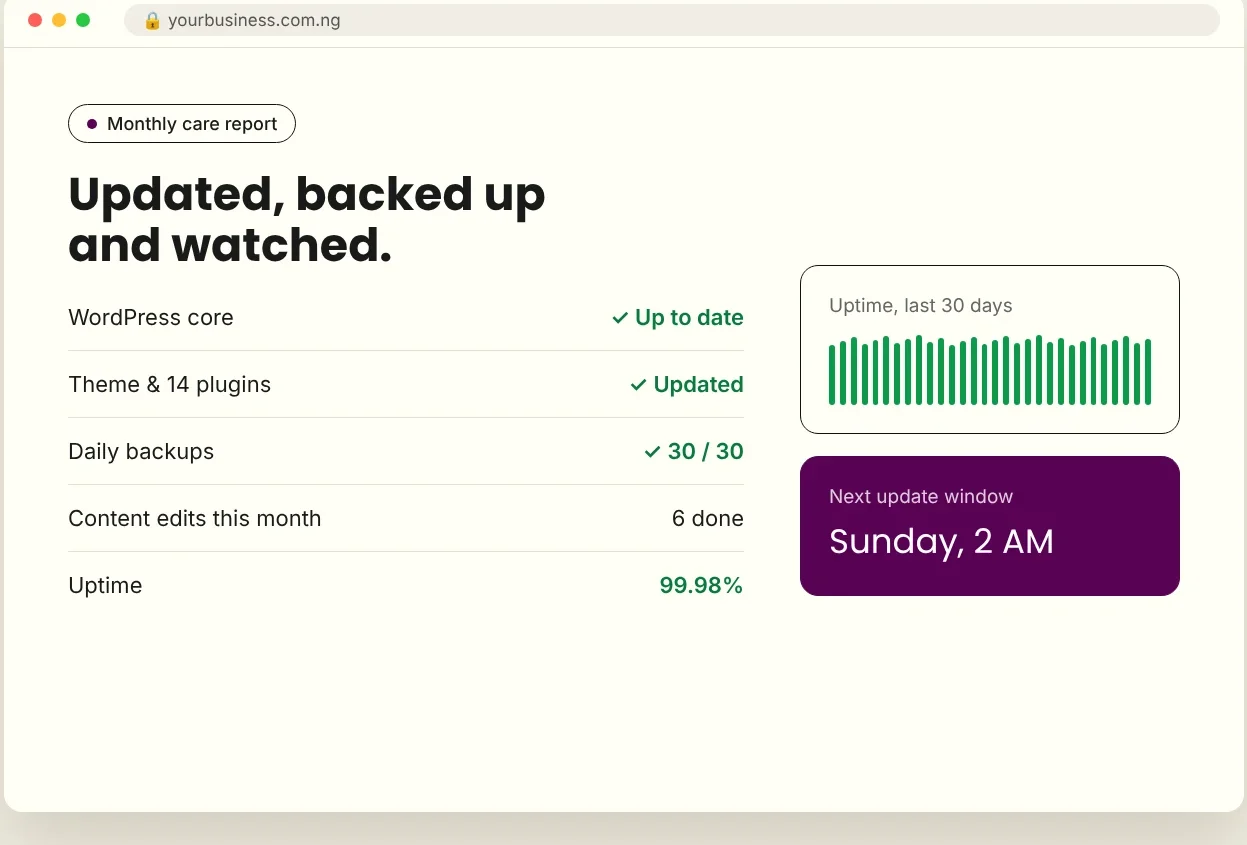
A website needs updates, backups, security checks and the occasional content change. Some businesses handle this themselves; many prefer a monthly or quarterly care plan. Either way, budget for it, because an unmaintained website becomes slow and vulnerable over time.
How to compare quotes fairly
When you have quotes in front of you, check that they cover the same things:
- How many pages, and how many unique designs?
- Is the design custom or template-based?
- Which features are included?
- Who writes the content and sources images?
- How many rounds of revisions?
- Is there support after launch, and for how long?
- Who will own the website, domain and accounts?
A very low quote often leaves out content, revisions, security, training or ownership. Ask before you sign.
- Page count, unique layouts and features drive most of the cost.
- Content, photography and branding can add time if they are not ready.
- Domain, hosting and email are yearly running costs, separate from the build.
- Compare quotes line by line, including revisions, support and ownership.
The bottom line
A good website price reflects the work needed to reach your goals. Understand the drivers, decide what you need now and what can wait, and you will get a quote that fits your business rather than a number that surprises you later. You can see our packages on our pricing page, and we are always happy to talk through what your project needs.
Tell us about your business and we will recommend the right next step. The first consultation is free.