


Most website projects do not run late because of design or code. They run late because content, logins and decisions arrive slowly. The good news is that you can fix most of that before the project even starts.
Here is what to prepare before you hire a web designer, whether you work with us or anyone else.
Be clear on why you need a website
Start with the business reason. Are you trying to get more enquiries, look more credible to corporate clients, sell online, recruit staff or replace an outdated site? Write it down in one or two sentences.
This shapes everything: the pages you need, the content you write and how the design guides visitors.
A clear goal is the best brief you can give a designer.
List the pages you think you need
You do not need a perfect sitemap, but a rough list helps. Most service businesses start with:
- Home
- About
- Services, often one page per main service
- Projects, portfolio or case studies
- Contact
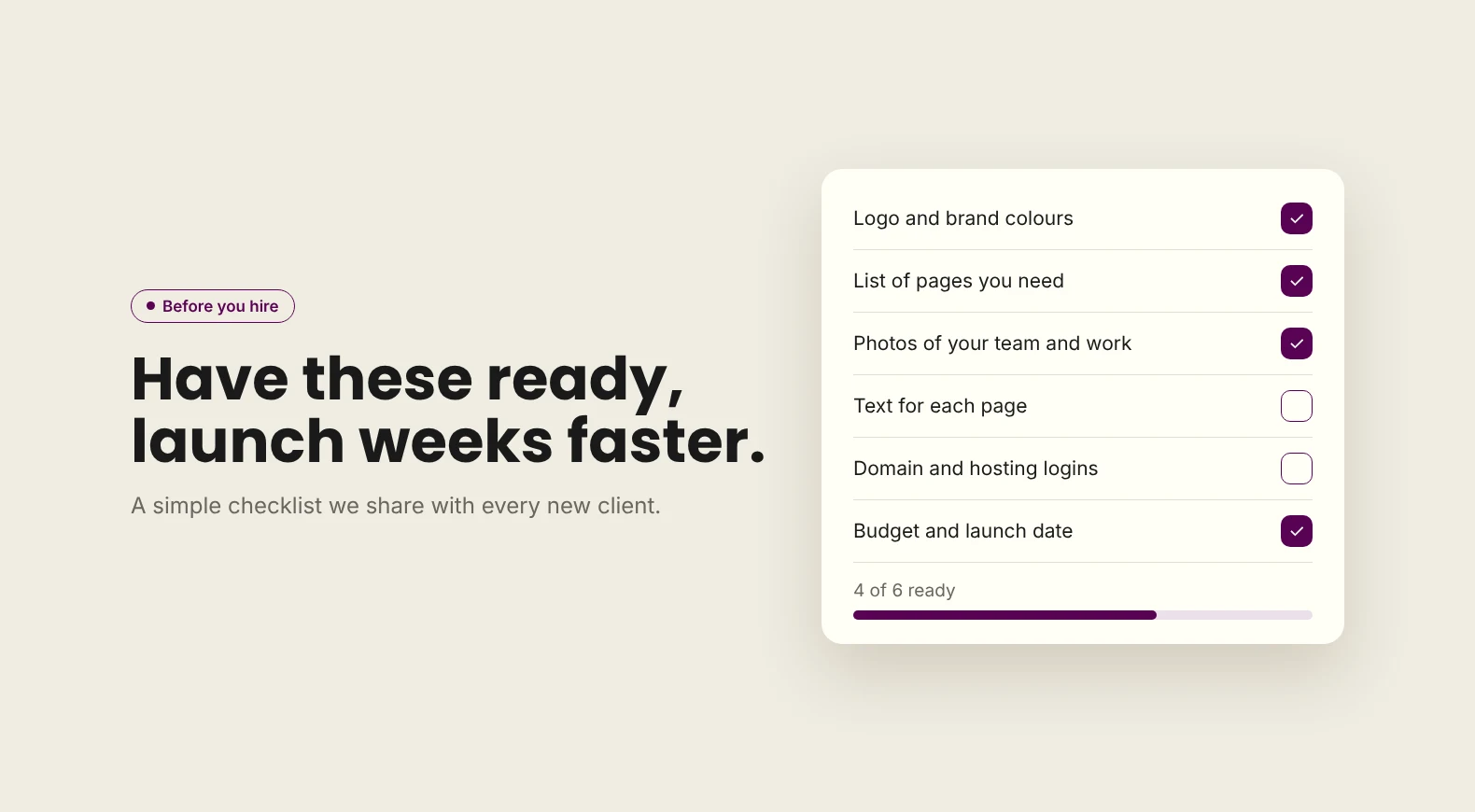
Add anything specific to your business, such as admissions for a school, practice areas for a law firm or a booking page for a clinic. Your designer will refine the list with you.
Gather your brand assets
If you already have a brand, collect the files in one place:
- Your logo in high quality, ideally SVG, AI, EPS or a large PNG
- Your brand colours and fonts, if you have a guide
- Photos of your team, office, products or work
- Any brochures or company profiles you already use
If you do not have a logo or brand yet, say so early. It is easier to design the brand first and build the website around it than to bolt one onto the other.
Start on your content early
Content is the single biggest cause of delays. You know your business better than anyone, so start drafting:
- A short description of what you do and who you serve
- A paragraph or two for each service
- Team bios and roles
- Answers to the questions customers always ask
It does not need to be perfect. A designer or copywriter can tighten it, but they cannot invent your experience or your client results.
Find your logins
You will save days by locating these before the project starts:
- Your domain registrar account
- Your current hosting account, if you have one
- Your business email admin, such as Google Workspace or Zoho
- Social media pages you want linked
If a former staff member or developer holds them, sort that out now. Recovering lost accounts can take time.
Collect examples you like
Find three to five websites you admire, and note what you like about each. It might be the layout, the colours, the photos or how simple the contact page is. This helps your designer understand your taste much faster than describing it in words.
Set a realistic budget and timeline
Know your budget range and any fixed dates, such as a launch event or a new office opening. Share both openly. A good designer will tell you what is realistic and suggest what to prioritise if the budget or time is tight.
Decide who approves the work
Choose one person who gathers feedback and gives approvals. When several people send conflicting comments, projects stall. One decision-maker keeps things moving.
- Write down why you need the website in one or two sentences.
- List your pages and start drafting content early.
- Gather your logo, brand files, photos and account logins.
- Choose one person to give feedback and approve each stage.
The bottom line
The more you prepare, the faster and smoother your project will run. You will also get a better website, because your designer can spend their time on design and strategy instead of chasing content and passwords.
Tell us about your business and we will recommend the right next step. The first consultation is free.